
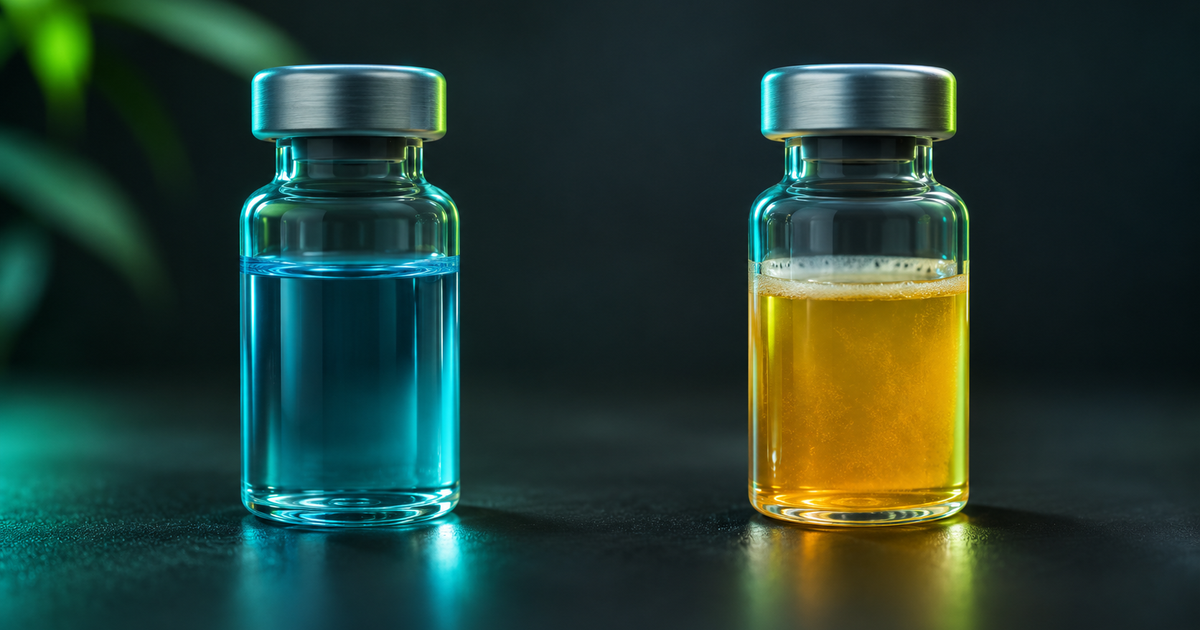
Two very different shots
If you've lived with joint pain long enough, someone has probably offered you a cortisone shot. More and more, you'll also hear about PRP. Both are injections, both are done in an office, and both can help people feel better. But they work in very different ways, and that difference matters when you're deciding what to do next.
How cortisone works
Cortisone is a corticosteroid, a powerful anti-inflammatory medication. Injected into a painful joint or around a tendon, it calms inflammation quickly, and many people notice relief within days.
The trade-off is duration. Relief from cortisone often fades within weeks to a few months, and many providers limit how many injections a joint receives in a year because repeated steroid injections raise concerns about cartilage and tendon tissue over time.
How PRP works
Platelet-rich plasma is made from a small sample of your own blood. It's spun in a centrifuge to concentrate the platelets and the growth factors they carry, then injected into the area that needs support. Instead of shutting down inflammation, PRP is intended to support your body's own repair processes.
Because it works with your biology rather than overriding it, PRP runs on a slower timeline. Changes, when they come, usually build over several weeks.
What the research shows
Several large reviews have compared the two head to head:
- Knee arthritis: a 2024 meta-analysis of 35 randomized trials found cortisone and PRP performed similarly in the short term, while PRP showed greater, clinically meaningful improvement at mid and longer-term follow-ups.
- Knee arthritis: a 2021 systematic review reported better pain, stiffness, and function scores with PRP than cortisone at 3, 6, and 9 months.
- Heel pain: a 2021 meta-analysis in the American Journal of Sports Medicine found PRP provided better pain control than cortisone from about three months out to a year, though the authors noted many studies were of modest quality.
The honest summary: cortisone tends to win on speed, and PRP tends to look better over time. Researchers are still refining PRP preparation and dosing, and not every medical society recommends PRP yet.
Which one fits you?
Cortisone may make sense when:
- You need fast relief from a flare
- Pain is driven mainly by acute inflammation
- You need short-term relief for an upcoming trip or event
PRP may make sense when:
- Pain has lasted months and keeps returning
- Cortisone helped briefly or stopped helping
- You want to avoid or delay surgery
- You prefer a treatment made from your own blood
Sometimes the answer is neither, and a focused rehab program comes first. Your provider will help you weigh the options for your specific joint.
What to expect with PRP
PRP is usually done in a single appointment: a blood draw, a short wait while the sample is processed, and a targeted injection. Many patients return to normal daily activities the same day. Temporary soreness or stiffness at the injection site for a few days is common. Your provider will tell you what to expect for your situation, including any activities to pause.
Tired of the cortisone cycle? Call (424) 206-1511 or book a consultation at our Torrance clinic. You can also learn more on our Platelet Rich Plasma page.
Research referenced
- Bensa A, et al. EFORT Open Reviews, 2024. Corticosteroid vs. hyaluronic acid vs. PRP for knee osteoarthritis.
- Intra-articular PRP versus corticosteroid injections for knee osteoarthritis: systematic review and meta-analysis, 2021.
- Hohmann E, et al. PRP versus corticosteroids for plantar fasciitis. American Journal of Sports Medicine, 2021.
This article is for general educational purposes and is not medical advice. Regenerative therapies are not guaranteed to work for everyone; results vary. Please consult a qualified provider to determine what's appropriate for you.
— Torrance Regenerative Medicine, Clinical Team